Laboratories, workshops and project-based learning
About the stream
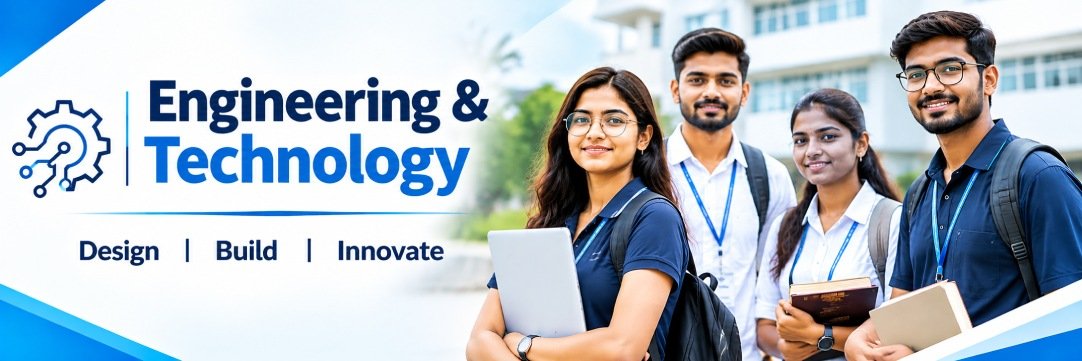
What is Engineering & Technology?
Engineering and technology apply mathematics, science and design thinking to develop systems, products, infrastructure and digital solutions. Students build analytical, technical and problem-solving skills through theory, laboratory work, projects and industry exposure.
Explore your optionsUndergraduate · Postgraduate · Diploma · Doctoral · Professional pathways
Course directory
Programs Offered in Engineering & Technology
Programme names and availability vary by university, campus and academic session. Explore common course pathways below.
- Diploma in Engineering
- B.Tech / B.E. (major branches)
- B.Tech Lateral Entry
- Integrated B.Tech + M.Tech
- M.Tech
- M.E.
- B.Sc. Engineering / Technology (where offered)
- Ph.D. in Engineering
- Specialisations in Computer Science, AI & Data Science, Mechanical, Civil, Electrical, Electronics, Chemical and related fields
Learning experience
Key Features of Engineering & Technology Programs
Technical clubs, competitions and innovation projects
Internships and industry interaction
Specialisation choices across engineering branches
Admission guide
Admission Eligibility
These are broad entry patterns, not a substitute for the current prospectus. Final eligibility is set by the university and, where applicable, the statutory regulator or professional council.
- Diploma: usually Class 10; subject and marks criteria vary.
- B.Tech / B.E.: usually Class 12 with Physics and Mathematics plus an approved subject combination; entrance or merit criteria may apply.
- Lateral entry: commonly a relevant engineering diploma or eligible B.Sc. qualification.
- M.Tech: usually a relevant B.E./B.Tech or equivalent; entrance requirements vary.
Future pathways
Career Scope After Engineering & Technology
✓Software and IT services
✓Core engineering and manufacturing
✓Civil infrastructure and construction
✓Electronics, automation and robotics
✓Renewable energy and sustainability
✓Research, product development and higher studies
Career outcomes depend on the chosen qualification, practical skills, experience, location, recruitment requirements and any mandatory professional registration.
Common questions
Frequently Asked Questions
What subjects are generally required for B.Tech?
Physics and Mathematics are generally required in Class 12, along with an approved third subject. Exact subject and minimum-mark rules vary by institution and branch.
Can diploma holders apply for B.Tech lateral entry?
Many institutions offer lateral entry to eligible diploma holders in a relevant discipline, subject to state and university rules.
What career options are available after engineering?
Options include software, core engineering, infrastructure, manufacturing, design, analytics, research and public-sector pathways, depending on specialisation and recruitment criteria.
Plan your next step with confidence